Creating Outdoor Spaces
Informed by close observations of engaged play we create: slack space; play areas; schools/nurseries; play landscapes; woodland fringes, civic areas and places of interest to young people
Working with Loose Material
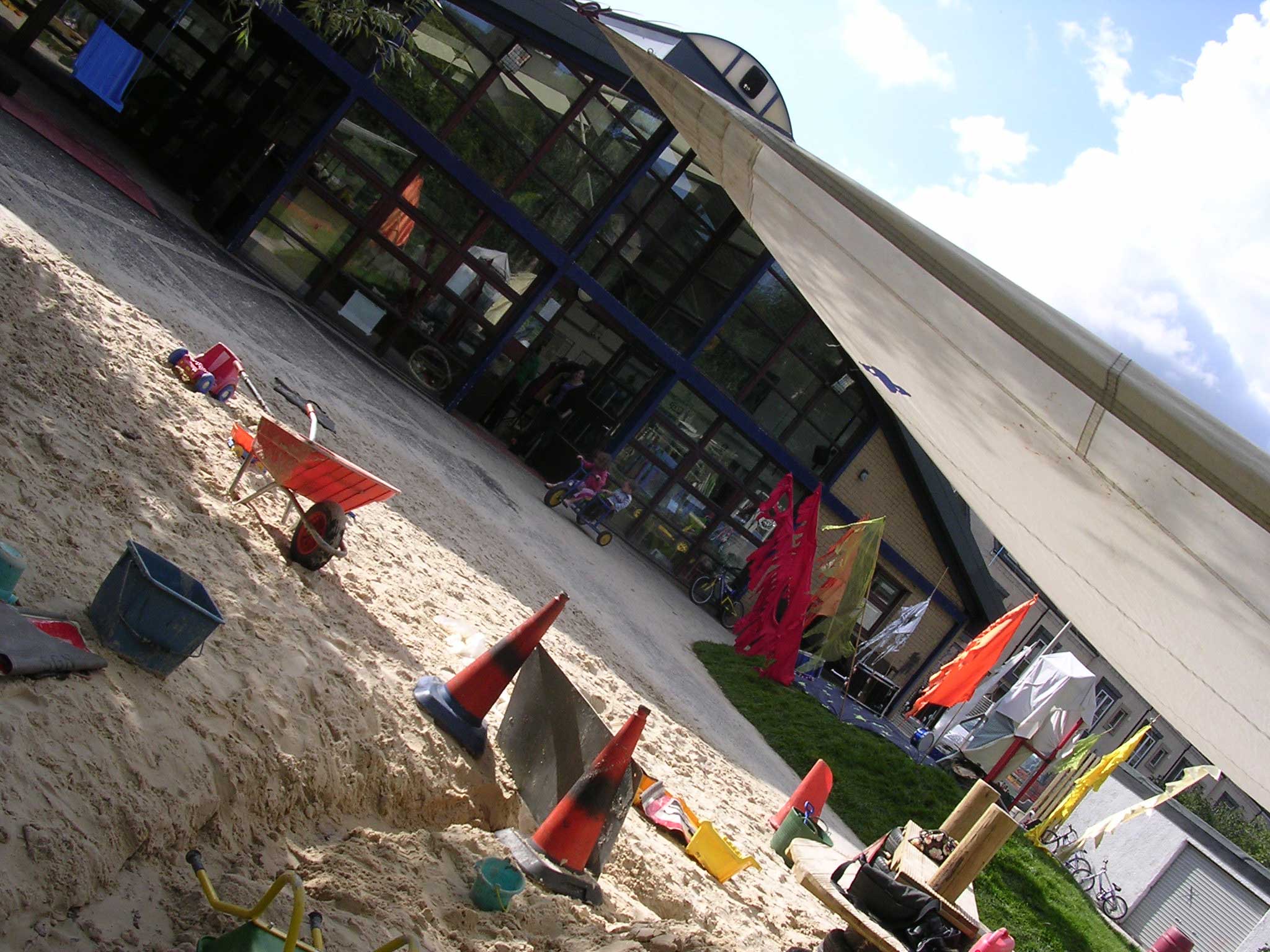
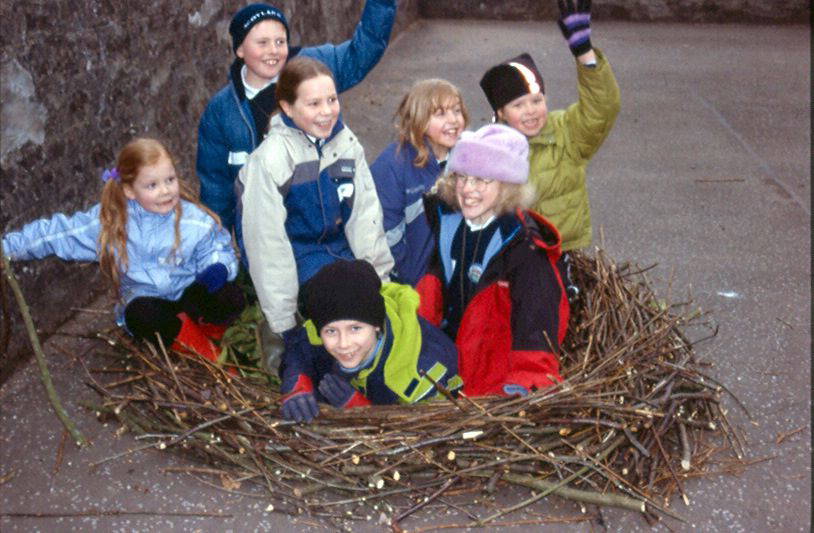
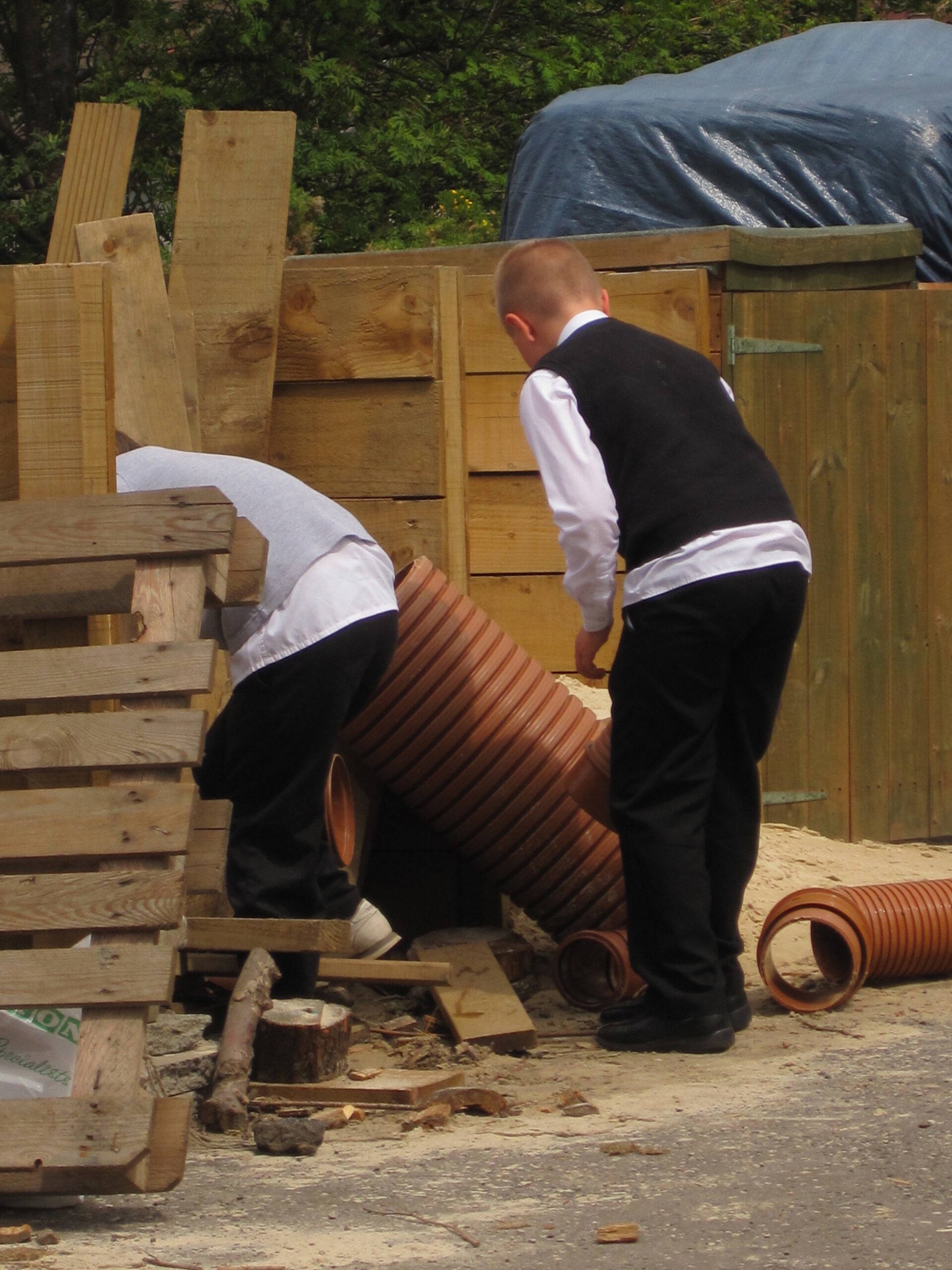
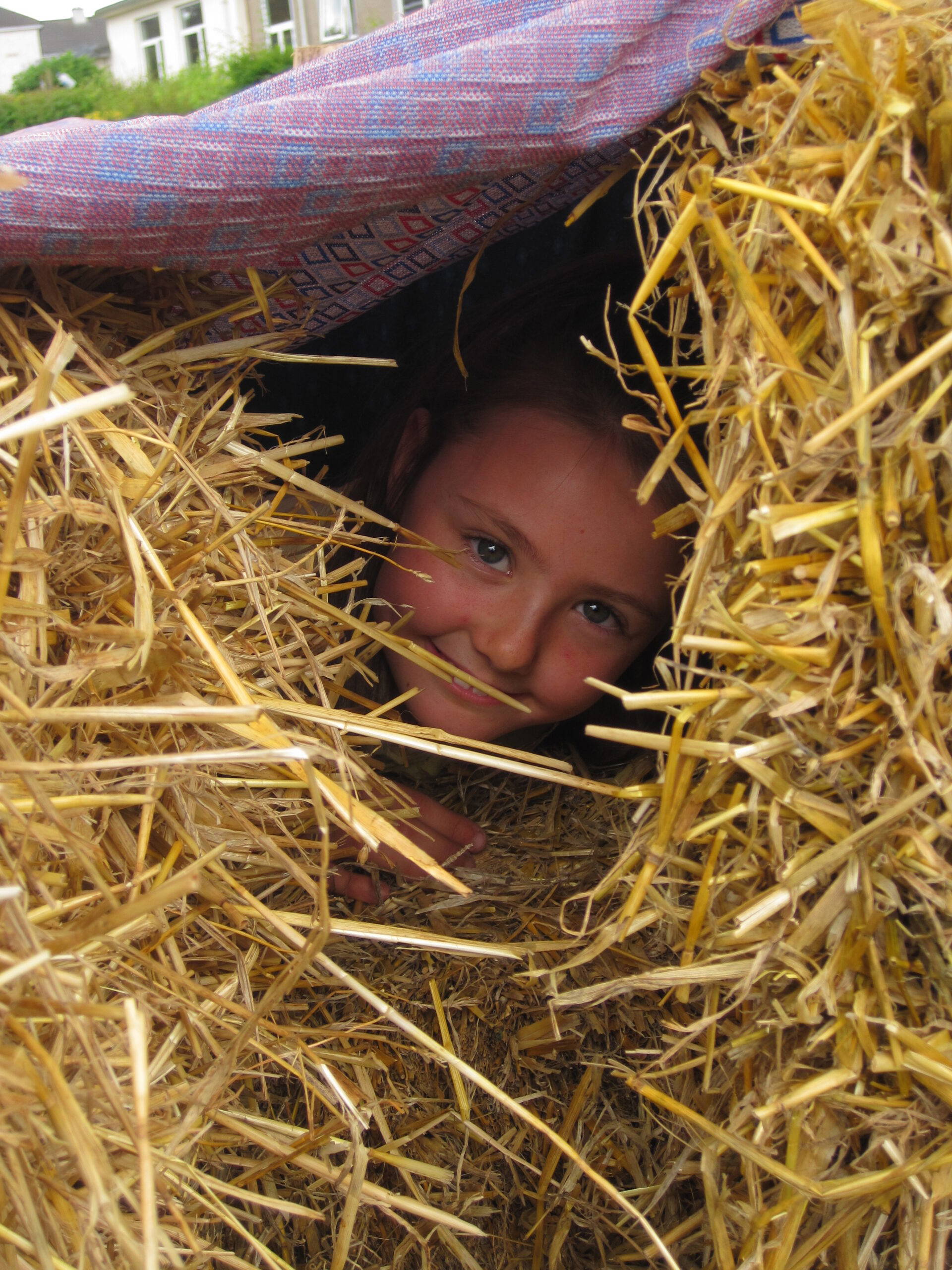
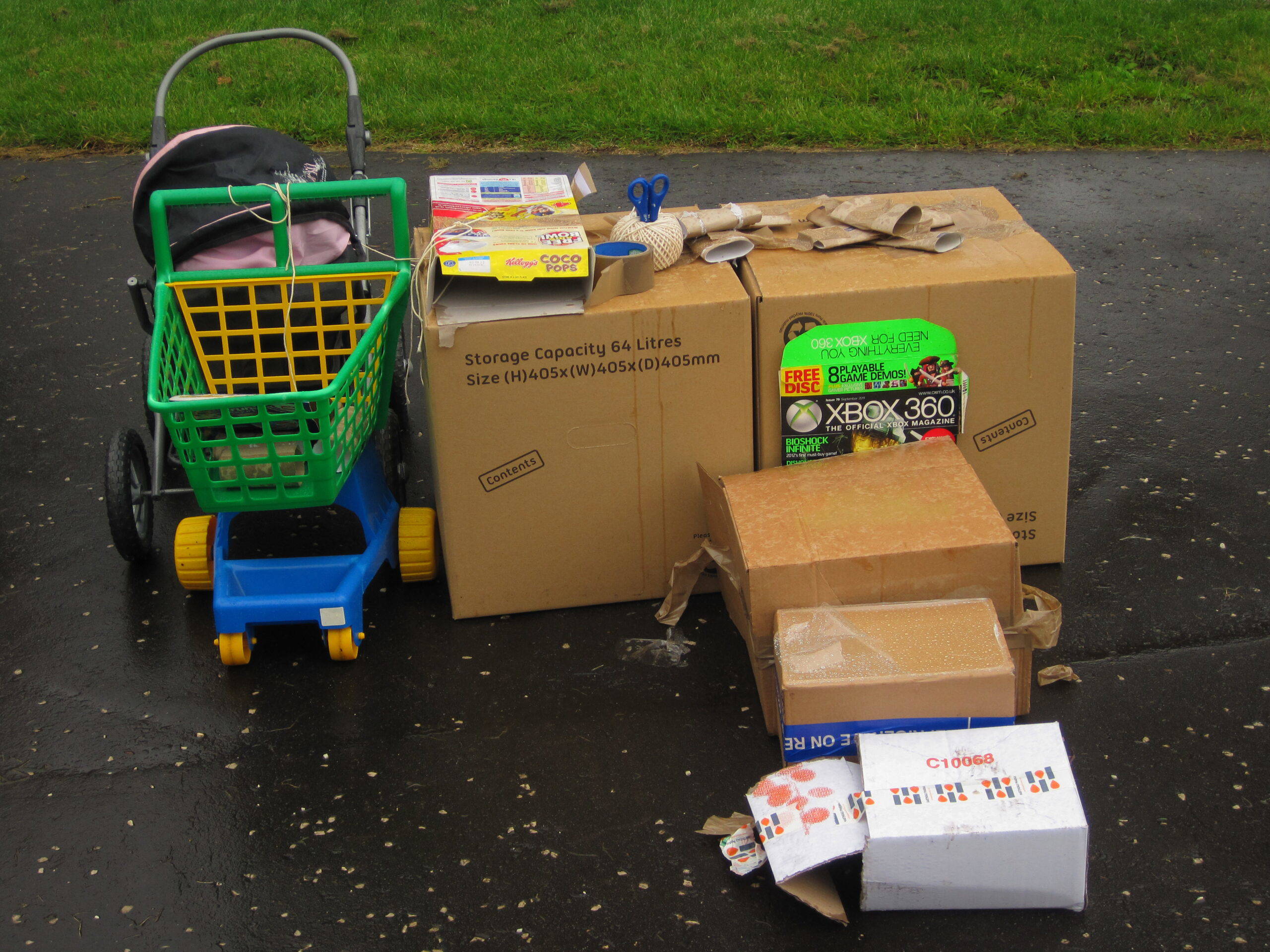
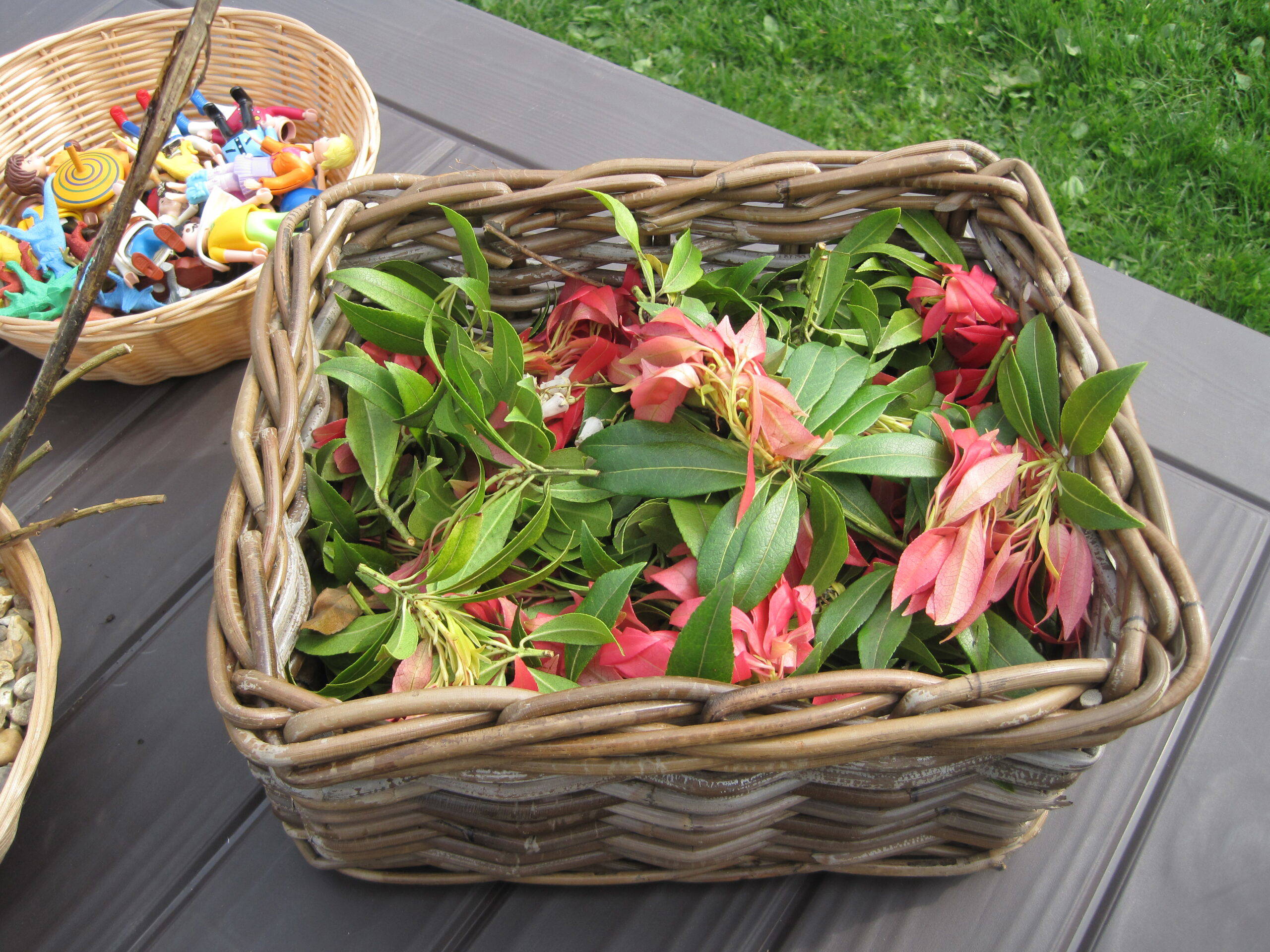
Loose materials are materials that are open to manipulation. Some examples are water, sand, grit, mud, clay, stones, rods, canes, twigs, branches, wood sections, leaves, cones, berries, seeds, flower heads and fabric as well as materials like planks, pallets, cardboard, rope, fabric, pipes, guttering and small figures of people, animals and vehicles. Being non-prescriptive about the materials themselves is part of the game! Some materials can be produced on the site itself, for example by what is planted there. Some can be installed on site, eg by designing in a permanent sand play area or an outdoor water supply. Some can be brought onto the site from elsewhere, as required and for varying amounts of time; in which case some kind of on-site storage is likely to be necessary.
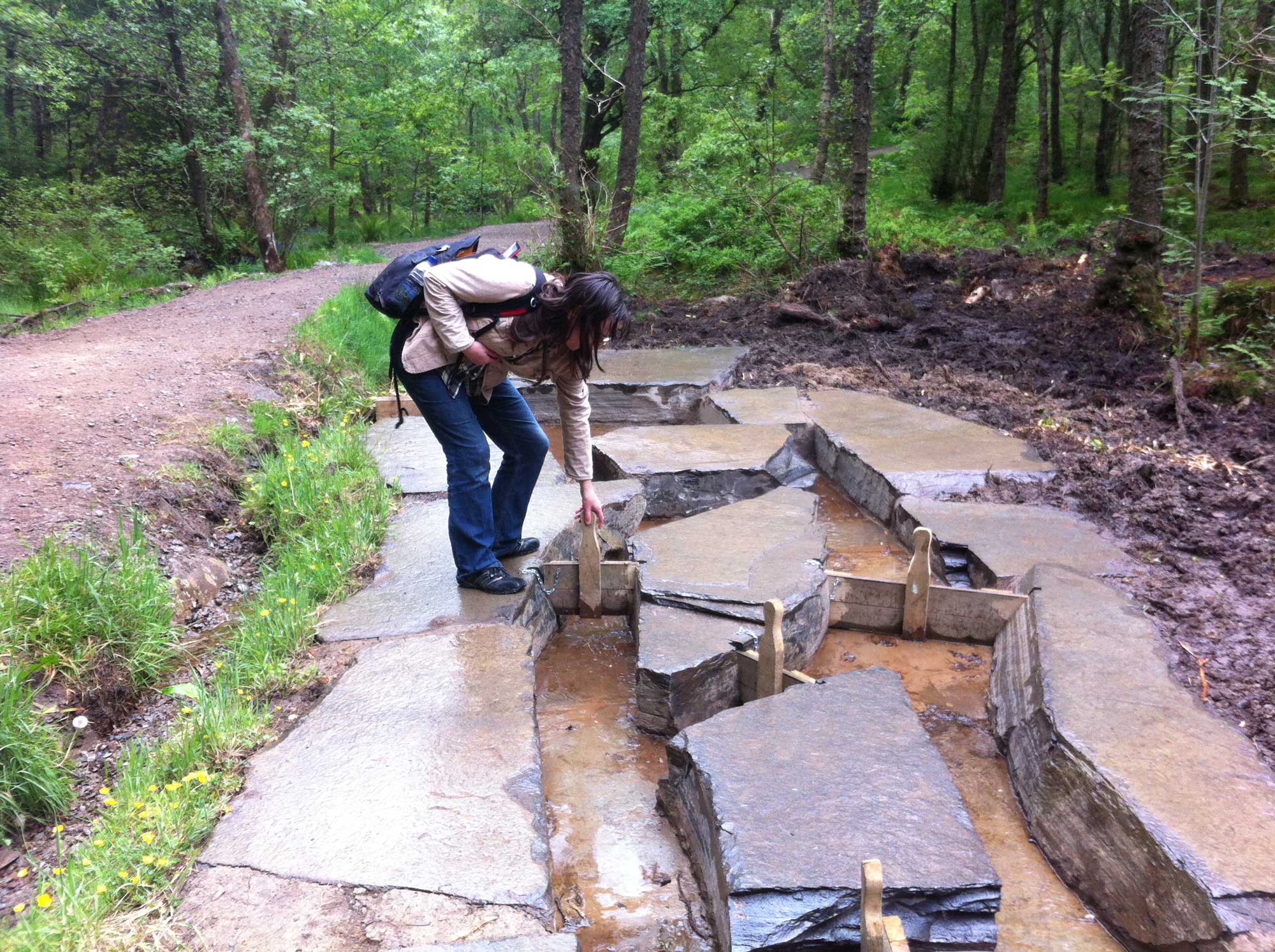
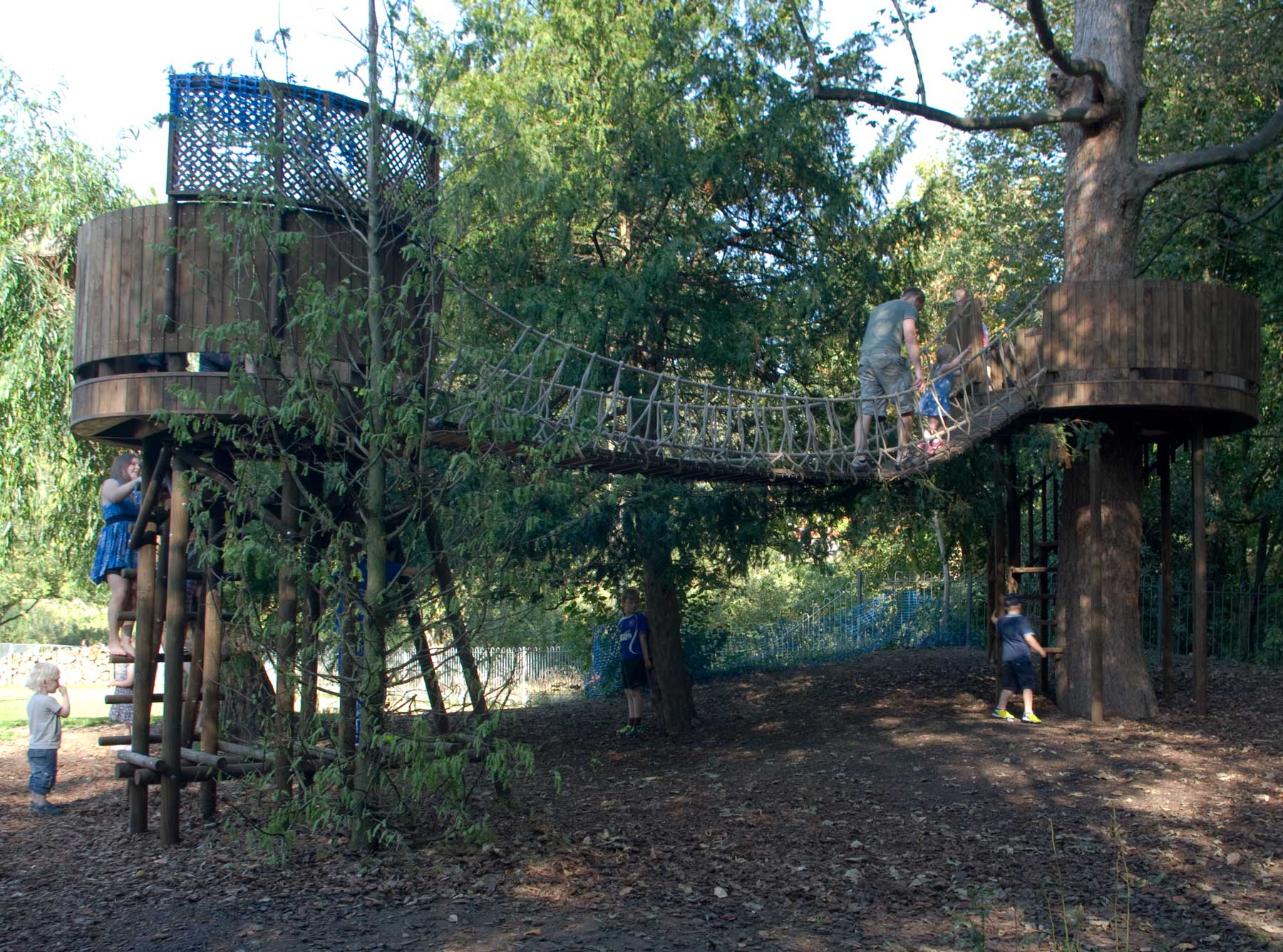
Permanent features of the site can be designed to facilitate the use of loose materials – eg structures that form a base or framework for building platforms, shelters and dens; hollows and channels that will collect water; shallow ditches that suggest bridge building; nooks and crannies that invite intimate, small-scale play.
Wildside’s ethos provides a strong emphasis on natural materials with playgrounds designed and planted to support and inspire this kind of play, meaning that elemental materials such as mud, water and sand can be freely available and that the place itself – the playground – becomes a landscape for play that changes and develops over time.
Wildside’s work with loose materials in North Lanarkshire led to their contribution of the publication This Place is Like a Building Site which has become a ‘How To’ guide for projects wishing to establish Loose Materials for play and learning.

Sand & Water
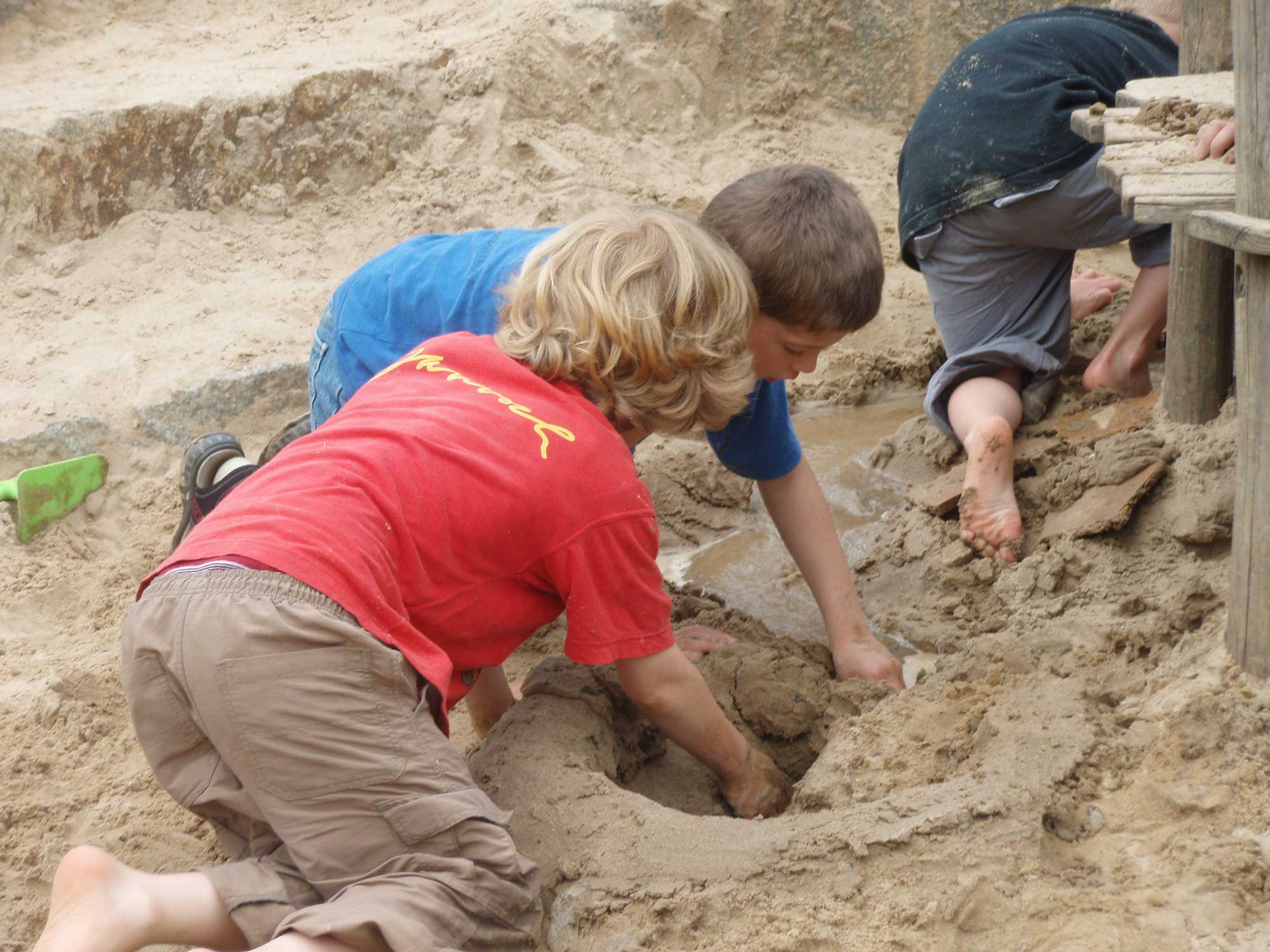
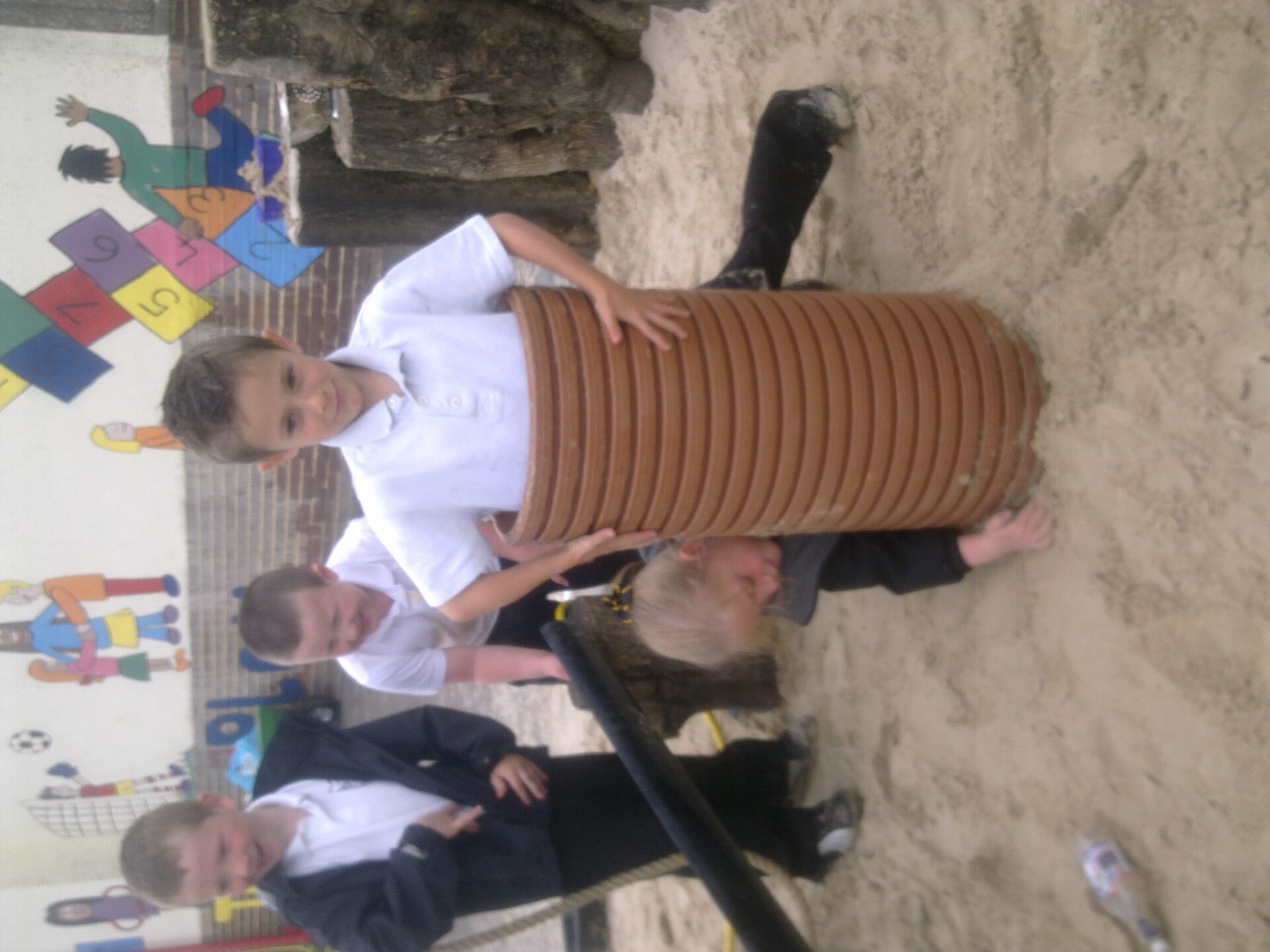
Good sand areas can promote a diverse range of play and learning opportunities including construction and engineering activities, social and co-operative enterprises, sculptural and tactile experiences. There is now a large body of research stating the convincing potential of sand to engage children in meaningful play over an extended period of time, important in a space like a school playground where children are playing so regularly.
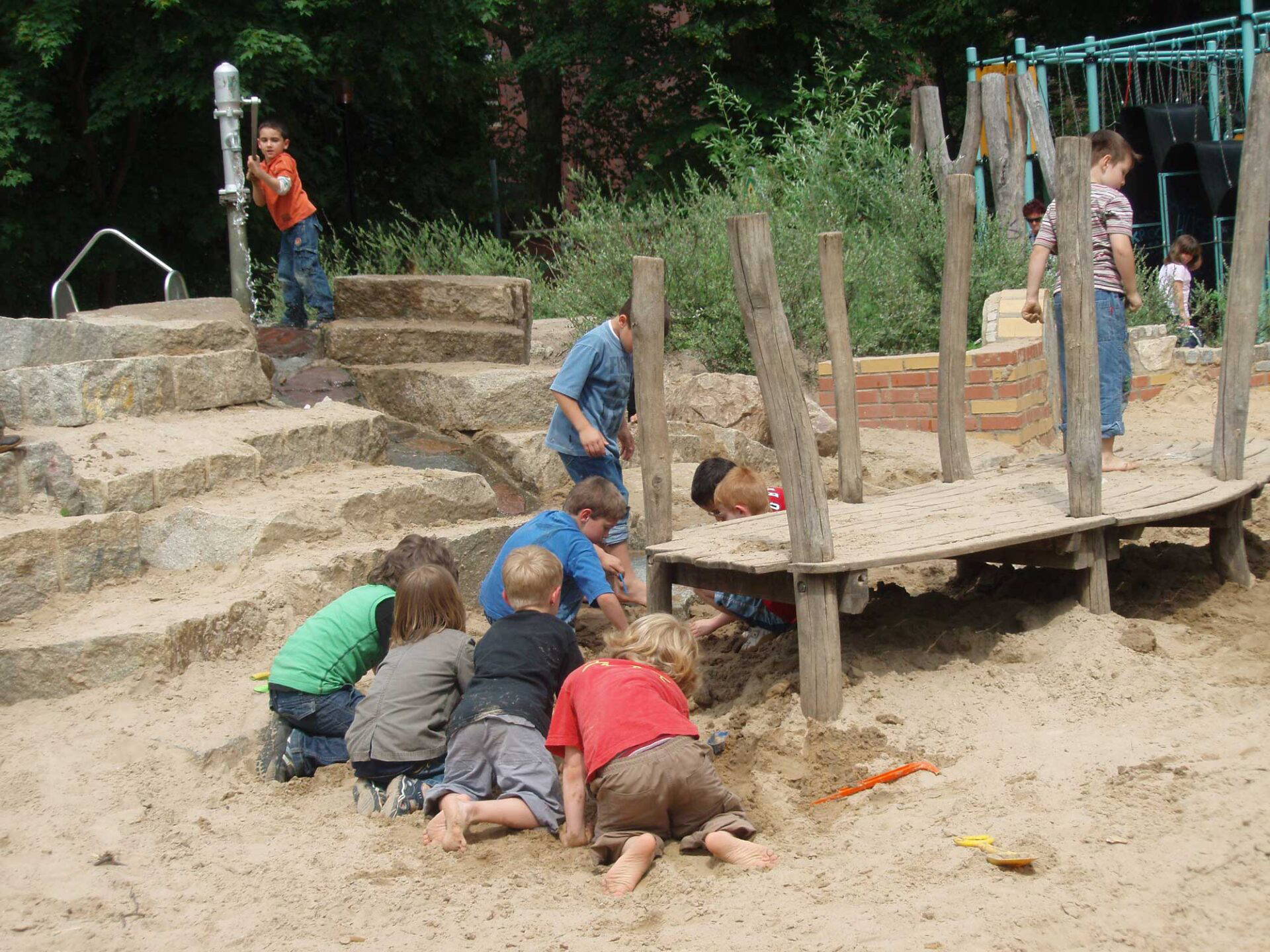
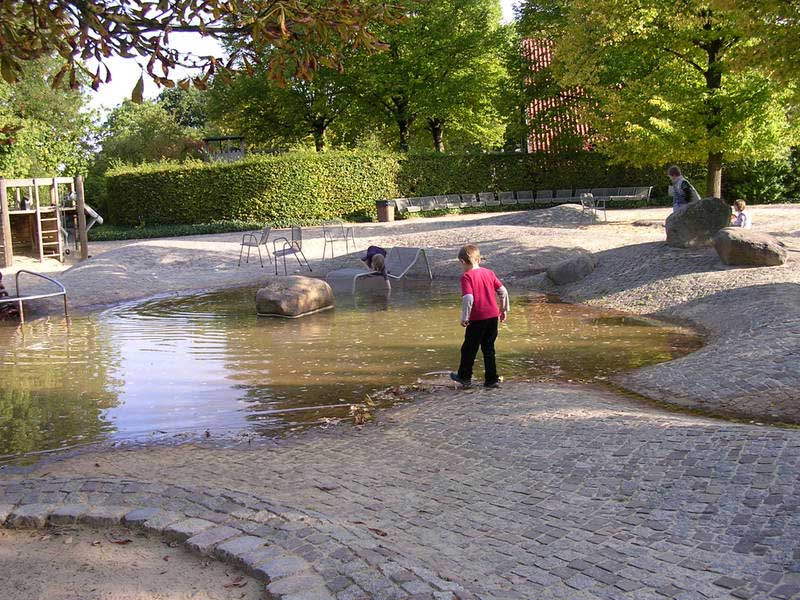
Sand areas offer unparalleled play opportunities if designed to approximate a beach rather than a sand box.
- They should be BIG
- The sand should be deep enough to really dig – at least 400mm
- The shape should be irregular, accommodating different groups and kinds of activities at a time.
- They should include suitable edges and/or platforms for sitting on, building on and incorporating into landscapes
- They can include structures such as pulleys which enhance and extend activity
- They can include planting for drainage and/or wind break purposes
- They should be assumed to be for ALL AGES. Older children love playing in sand as much as younger ones.
What kind of sand ?
There are a large number of sands available each with different properties. Builders’ sand is not suitable as can contain irritants and it can also stain. Silica sands are useful (eg FS9 from Fife Silica Sands) although there are a wide variety of sands which can be termed “play sand” or “white sand” with a rounded particle profile and a grain size maximum 1.25mm and a high proportion of fines.
Maintenance requirements
Sand provokes concerns about animal faeces, syringes and broken bottles. However these concerns are often exaggerated and sand is now being used successfully public play areas, including in urban inner city areas.
In a school a simple visual check of the sand area each morning before children arrive should show any changes or concerns. This is particularly important where grounds that are open to the public out of school hours. The sand should be raked regularly – for example weekly – with frequency depending on the nature of the site. This is the most important maintenance requirement, and one accommodated as part of general daily grounds checks.
Animal faeces
Cats (and foxes if they are present) can be attracted to sand areas as latrines and their faeces and urine can contain worms, parasites and bacteria. These need to be ingested in order to cause health problems (which include toxoplasmosis and E.coli). There are a number of approaches to managing this problem.
Monitoring is important as the situation will change over time as local cat and fox populations change. Cats are most likely to use a sand pit at night, so inspect in the mornings and adapt your inspection frequency to how frequently the problem occurs (e.g.daily, weekly or monthly). Rake the sand during inspection as cats will often bury their faeces.
Discourage cats from visiting the site. There are many ways that this can be done. Some schools have found that fixing large metal cats to nearby railings or using marble ‘cats eyes’ in the sand pit wall helps to deter cats. Other deterrents include high frequency devices that are triggered by animal movement, specific plants, bottles of water and using scents that cats dislike, or which mimic a stronger cat’s territorial boundary. Hand hygiene is important. Ensure that children wash their hands after sand play.
Dangerous litter
Sand areas in unfenced and open access school grounds may occasionally be used as social spaces in the evening, with a risk of broken glass ending up in the sand. The risk of syringe needles being discarded in sand is commonly cited and yet very rarely reported. In the UK, there are no recorded instances of a member of the public contracting a blood-borne viral infection from either a discarded needle or syringe.
Sand area covers, or not?
Covers are often suggested as a solution to perceived or actual problems. However, the covers themselves can generate further problems. Once covers are on there can be a tendency not to take them off, or for routines to become established where they only come off in ‘nice weather’. For large sand areas the best option is to use a tarpaulin with elasticated edges. However, tarpaulins are also liable to be stolen or damaged in areas where there is problematic use of the school grounds out of hours.
Disinfecting sand
Depending on the frequency of use the sand will need a regular disinfectant treatment – a weak solution of child-safe household disinfectant should be sprinkled on using a watering can or similar and sprayed in with a hosepipe (or substantial downfall of rain). Children should be kept out of the sand area for a day after disinfection.
Topping up and replacement of sand
he sand often needs topped up on an annual basis and completely replaced periodically, depending on the particular requirements of the site.
Clearing it up
Sand does travel, but this is a manageable problem
On windy sites, sand can blow out of the sand pit and across the rest of the playground. This doesn’t present any particular health and safety issue but is more an issue of losing sand which will need to be replaced. Well-designed sand pits will have considered the site’s windiness and be located in less windy areas. Recessing the sand pit and providing a low boundary wall helps to minimise the issue. Where the site allows it, planting quick growing shrubs (such as willow) around the sand pit can create a wind break. Hosing down the sand in very dry periods will also minimise blow.
Regular sweeping up is something that children can enjoy doing given the right equipment. Good sturdy brooms cut down to suitable sizes are much better than most children’s versions, which are often too flimsy for the job.
Sand indoors
Sand can travel indoors – in shoes, pockets and sleeves, creating extra work for cleaning staff. Children can be shown a sand routine of shaking their clothes out before they leave the sand area. Providing a soft brush for dusting down shoes and a good doormat for feet wiping will also help. Wash hands after sand play sessions.
Throwing Sand
Most schools establish not throwing sand as a basic, easily understood ground rule with an obvious penalty. In general, sand areas give rise to very few problems of behaviour – the reverse in fact. If a child gets sand blown or thrown into their eyes, pour cool water over the eye to flush out sand particles. Tears help to remove eye irritants so don’t discourage crying!
The main issue, especially at first and in larger schools, is controlling the number of children who use the area. This can be resolved through a rota system, though this should be reviewed regularly and varied so children sometimes have the opportunity to follow ideas through over a period of time and so that mixed age groups can play together.
Water
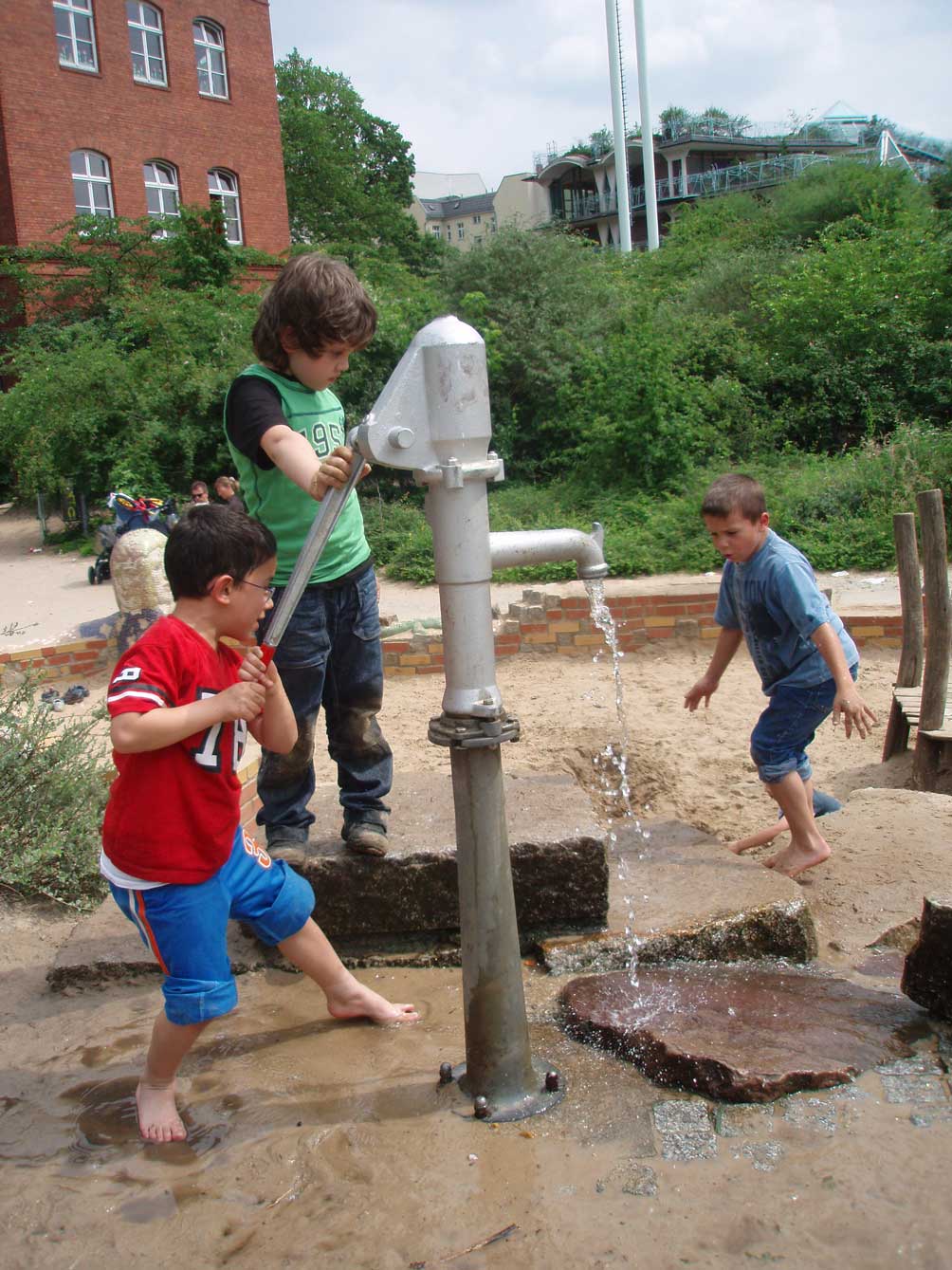
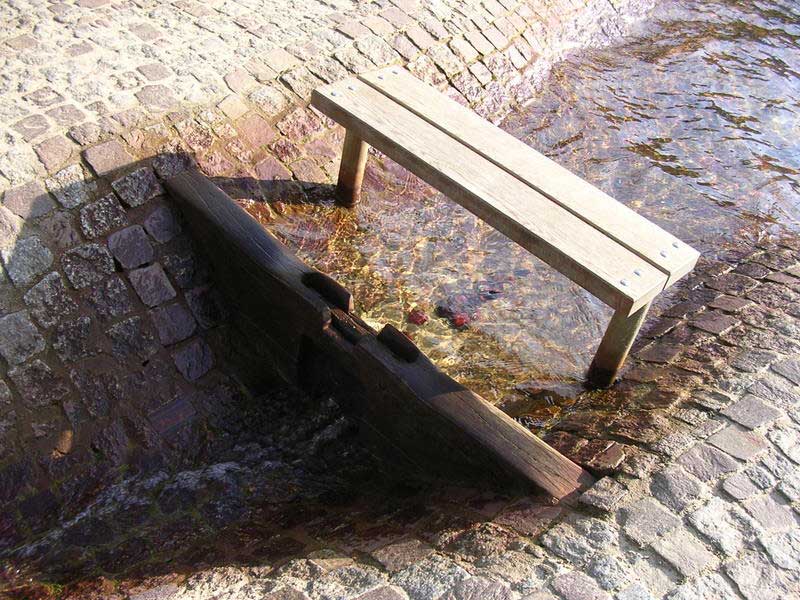
A water supply nearby will add exponentially to the play possibilities of sand as well as being an important resource in its own right. This is most easily supplied by installing an outside tap and hose. It is easy to ensure that taps can be turned off from inside the school and/or can be disabled when necessary.
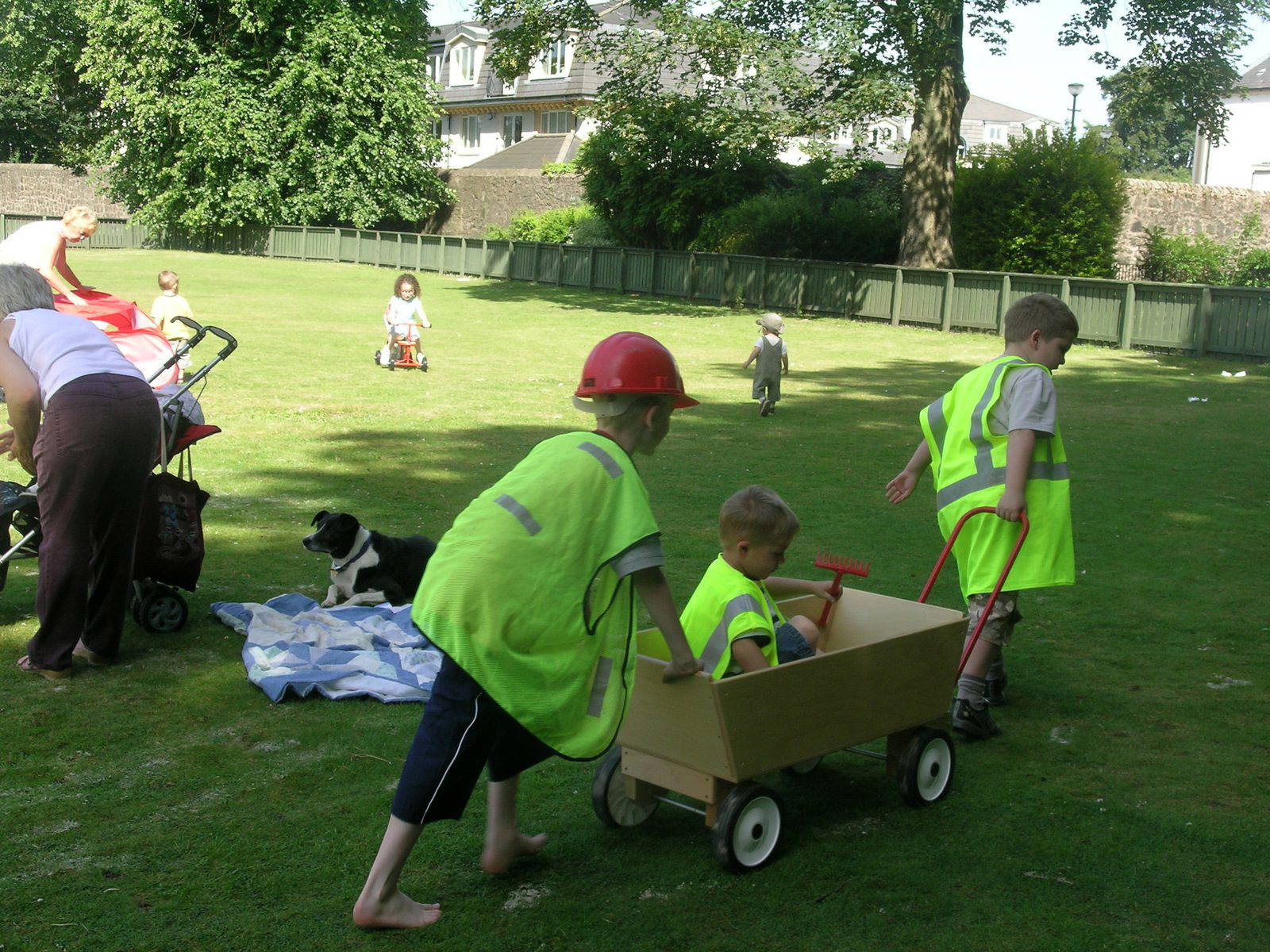
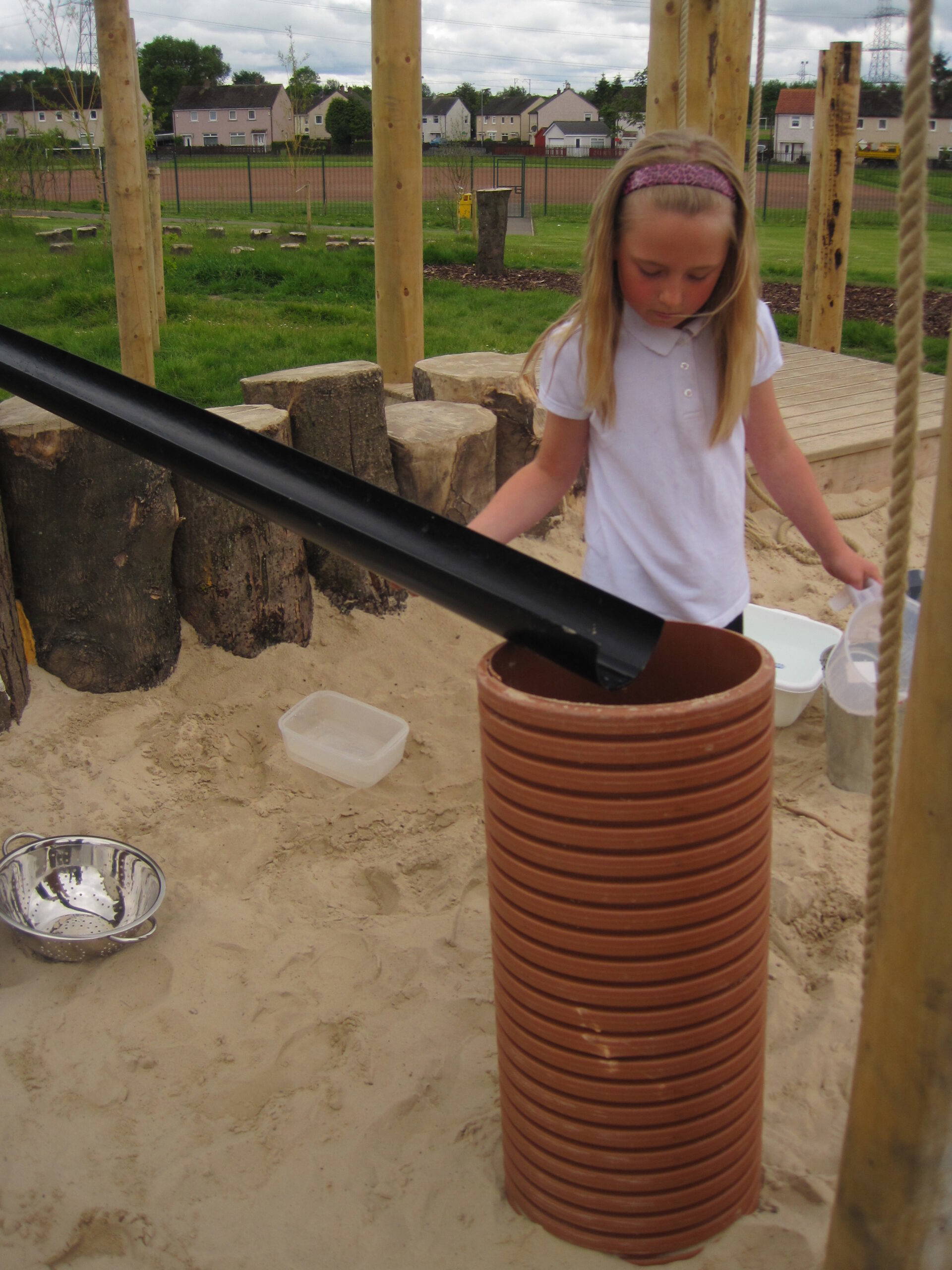
It’s also good to have large containers such as trugs or wheelbarrows that can be easily filled with water using the hose. Several trugs placed near each other and if possible at slightly different heights will accommodate a lot of children and will offer endless opportunities for syphoning, pouring, decanting, filling, exploring the floating properties of different materials and so on. In winter they can be filled and left to freeze and children can indulge their fascination with ice. Children’s desire to play with water means that in the absence of other supplies they will find it in drains and puddles.
Sand and water equipment
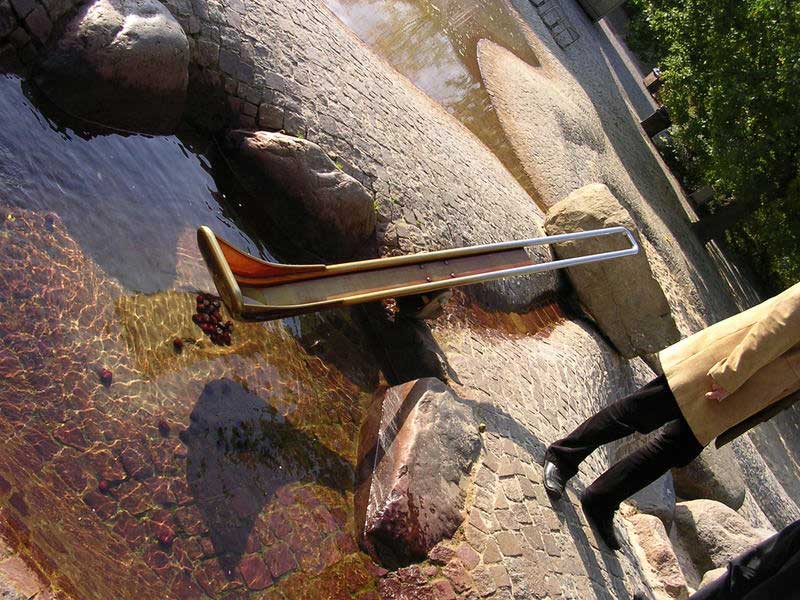
Water and sand are too often associated solely with very young children. But they are equally fascinating for older children too. This message can be conveyed in the kinds of extra equipment provided – garden equipment such as proper spades, trowels and forks and authentic household equipment such as plastic containers ( with and without lids), plastic bottles of varying sizes, trays, jelly moulds, cake tins, sieves, colanders, slotted spoons, plastic tubing, funnels, jugs, containers of all sizes are all good instead of or at least as well as traditional beach toys. Lengths of guttering and sections of piping are great for channelling water over long distance Trucks and diggers of various sizes will also add another dimension to sand and water
More temporary materials like cardboard tubing, paper cups and paper fairy cake ( and smaller) cases are good too as are an assortment of natural materials like shells, pebbles, branches, flowers, leaves etc.
Miniature animal, people, small vehicles and boats etc. alone or alongside these other resources will generate the creation of a plethora of scenes, events and narratives.
Materials need some management and renewal based on observation of use. Refreshing, adding and subtracting materials works best if it is a regular part of a designated staff role. However, the quality of the children’s experience is best served by observing the children at play/work to suggest what materials to supply.
Clothing
When introducing sand and water, mud etc and encouraging children to go out there and get stuck in, this can conflict with strict uniform policies that emphasise the importance of a neat, pristine appearance.
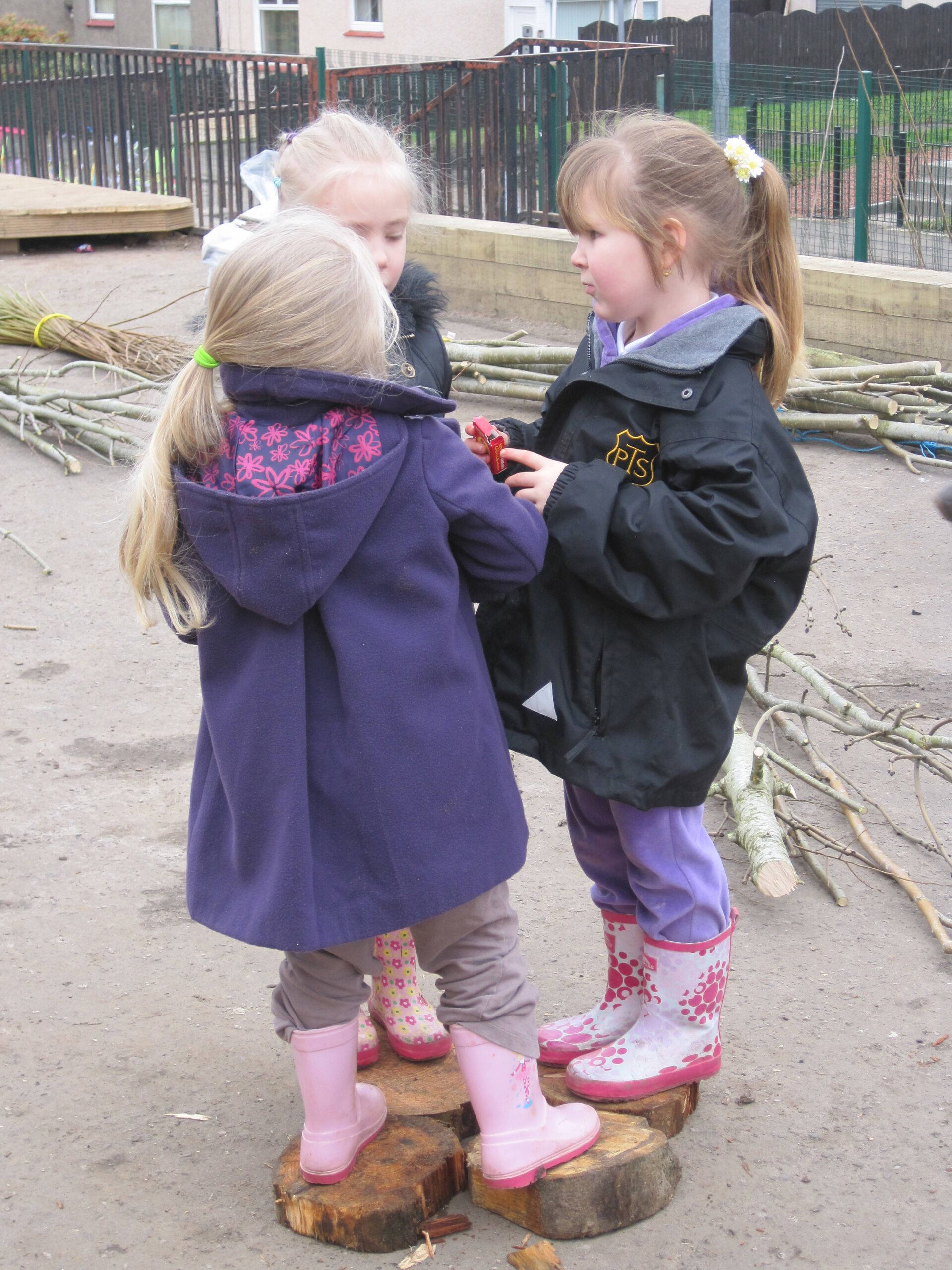
Ordinary sensible, comfortable, easily washable clothes plus wellington boots when necessary should be fine for most outdoor activities, and if all children are encouraged to bring a change of clothes to school, this will deal with getting soaked or muddy. There are some situations when waterproof jackets and trousers might be desirable – for example winter water play, or going out on very wet days.
Routine requirements to wear waterproof trousers, jackets and boots in order to play with sand and/or water are often unnecessary and can create a barrier between the child and the activity. These clothes are often not the most comfortable (especially the trousers) and take precious time out of already short designated outdoor play.
Success may require commitment by the provider to develop a suitable regime and make sure it is implemented and reviewed and adjusted when necessary.
Be persuasive, be innovative and encourage experimentation.